
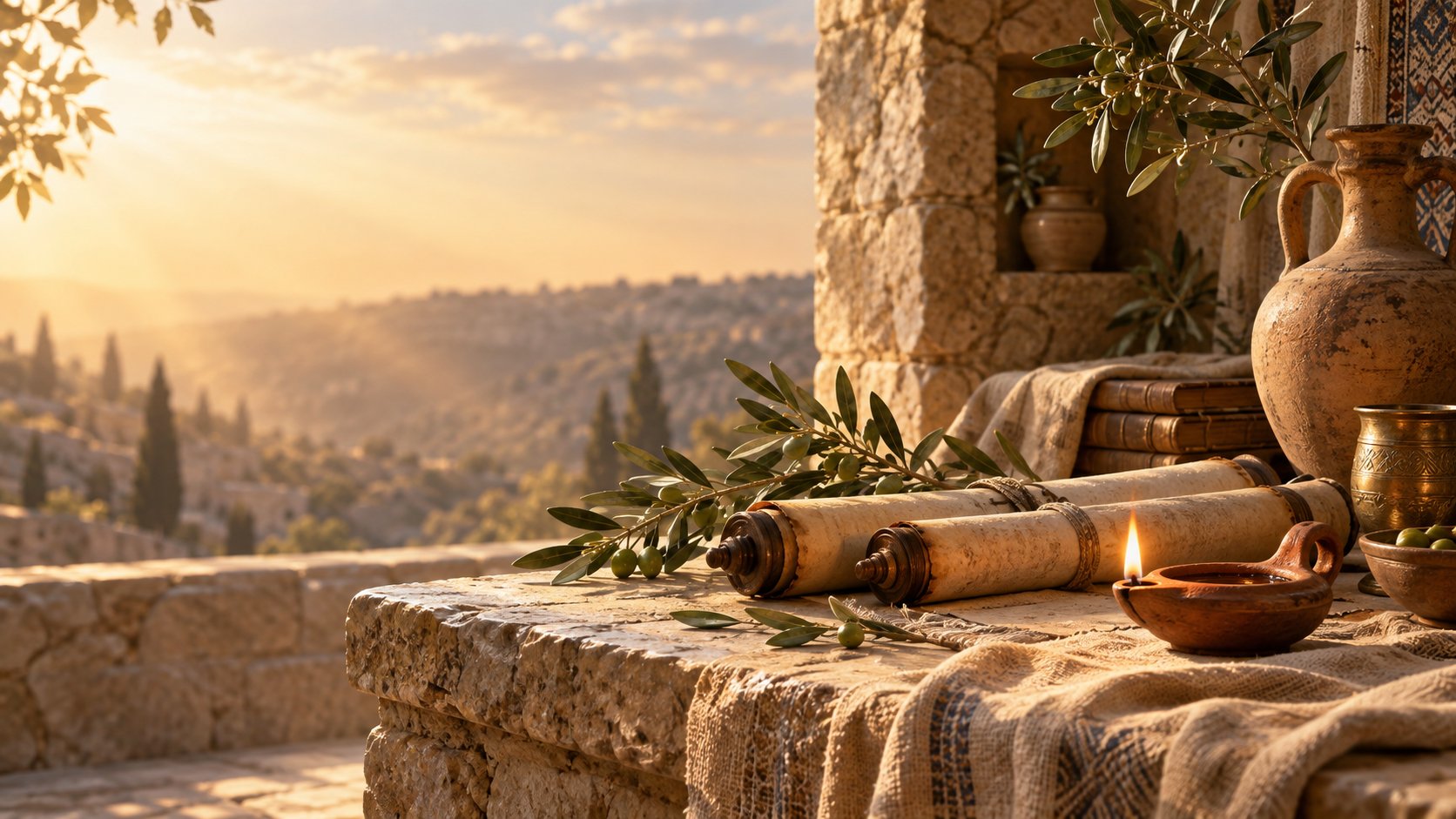
Olive oil was an essential part of everyday life in ancient Israel. It was used for nourishment, lighting, personal care and other practical purposes. Yet Scripture also gives olive oil a profound spiritual significance, particularly as an image of the Holy Spirit. In the Tabernacle, the golden lampstand required a continual supply of pure olive oil to keep its seven lamps burning (Exodus 27:20--21). The oil was the fuel that enabled the light to shine. This provides a prophetic picture of believers who are continually filled with the Holy Spirit and consequently reveal the light of Jesus Christ to the world. Anointing oil commonly has olive oil as its foundation, sometimes combined with fragrant ingredients. These fragrances can carry additional biblical meaning, particularly when they are associated with worship, consecration, prayer or important events recorded in Scripture. Frankincense, for example, is connected with prayer and worship, while myrrh appears in the sacred anointing oil and at significant moments surrounding the life and death of Jesus Christ.
An important distinction must be made between ordinary olive oil, contemporary fragrant anointing oils and the specifically prescribed Holy Anointing Oil described in Exodus 30:22--33. God gave Moses an exact composition containing myrrh, cinnamon, aromatic cane, cassia and olive oil, and attached explicit restrictions to that sacred preparation. Those restrictions concern its prescribed composition and designated use; they do not constitute a general prohibition against using anointing oil or its individual ingredients. Exodus 30:34--38 also describes a separate sacred incense formula, which carries its own prohibition against reproduction for personal use. Both preparations must therefore be treated with the seriousness Scripture assigns to them. Contemporary anointing oils should not be presented as reproductions of these restricted formulas. Ordinary olive oil may be used for anointing, while fragrant preparations can provide additional symbolic associations. The difference does not lie in one mixture possessing greater spiritual power than another, but in their composition, purpose and biblical meaning. Our confidence must always remain in the Holy Spirit, whom the oil represents.
House of Anointing