
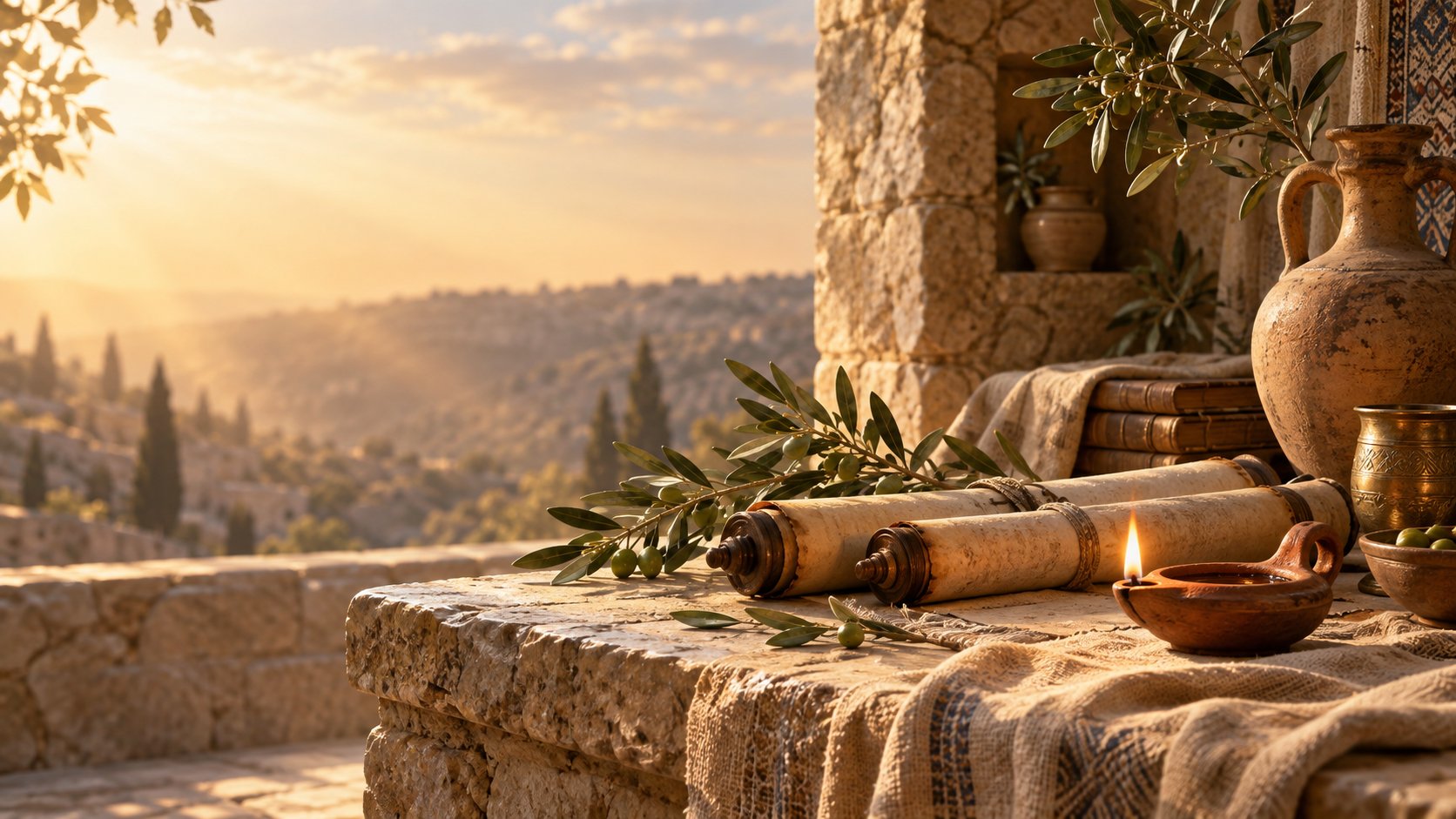
Oil held a prominent place in ancient Israel because it was both a valuable everyday resource and a substance through which significant spiritual truths could be expressed. It was used for nourishment, illumination, personal care, hospitality, joy and restoration. Psalm 104:15 describes oil as something that makes the face shine, while Ecclesiastes 9:8 encourages people to keep their garments white and their heads supplied with oil. Personal anointing was so common that deliberately refraining from it could communicate mourning or distress. When Joab instructed a woman to appear as someone who had been grieving for a long time, he specifically told her not to anoint herself with oil (2 Samuel 14:2). Daniel likewise refrained from anointing himself during a three-week period of mourning (Daniel 10:2--3). Conversely, when David ended his mourning, he washed, anointed himself, changed his clothes and went into the house of the Lord to worship (2 Samuel 12:20). Anointing thus served as a visible expression of restoration, blessing and a return to ordinary life. Deuteronomy 28:40 even includes the inability to enjoy one's olive oil among the consequences of disobedience, showing how closely oil was associated with God's provision and favour.
Within the Tabernacle, God gave oil and fragrance an even deeper significance. Four elements are particularly important when considering their prophetic meaning. The golden lampstand speaks of light and the continual supply of oil required to keep its lamps burning. The table of showbread speaks of fellowship with God, with frankincense placed upon the bread as a memorial offering (Leviticus 24:7). The altar of incense represents prayer and worship, an image also found in Revelation 5:8 and 8:3--4. Finally, the Holy Anointing Oil represents consecration and empowerment, setting apart the Tabernacle, its furnishings and the priests for service to God (Exodus 30:26--30). Together, these elements reveal a remarkable picture of the Christian life. Jesus Christ is the Bread of Life, the Light of the World and our High Priest. Through Him, believers receive access to the Father and are called to live continually in fellowship with God. Just as the Tabernacle lamps depended upon a supply of oil, we depend upon the Holy Spirit to keep His light burning within us. Oil was therefore not chosen merely for its practical qualities. Through its biblical use, it became a powerful visible image of God's provision, presence, holiness and empowerment.
House of Anointing